The Innovation Dilemma

Why Good Companies Can't Build What We Need

Why Good Companies Can't Build What We Need


Robert Kenfield | 7 mins read | December 3, 2025
Clayton Christensen explains why Google, Notion, and others will never solve this problem

Clayton Christensen explains why Google, Notion, and others will never solve this problem

Clayton Christensen explains why Google, Notion, and others will never solve this problem

If the problems with productivity tools are so obvious, fragmentation, surveillance, cognitive overload, acceleration, why don't the companies that make these tools fix them?


Google has brilliant engineers and virtually unlimited resources. Notion has raised hundreds of millions in venture capital. Microsoft, Apple, Asana, Todoist, all are staffed by talented people who genuinely want to help users be more productive.


So why do they keep building variations on the same fragmented tools? Why do new features add complexity rather than solving fundamental problems? Why does every "next generation" productivity app reproduce the same architectural flaws?


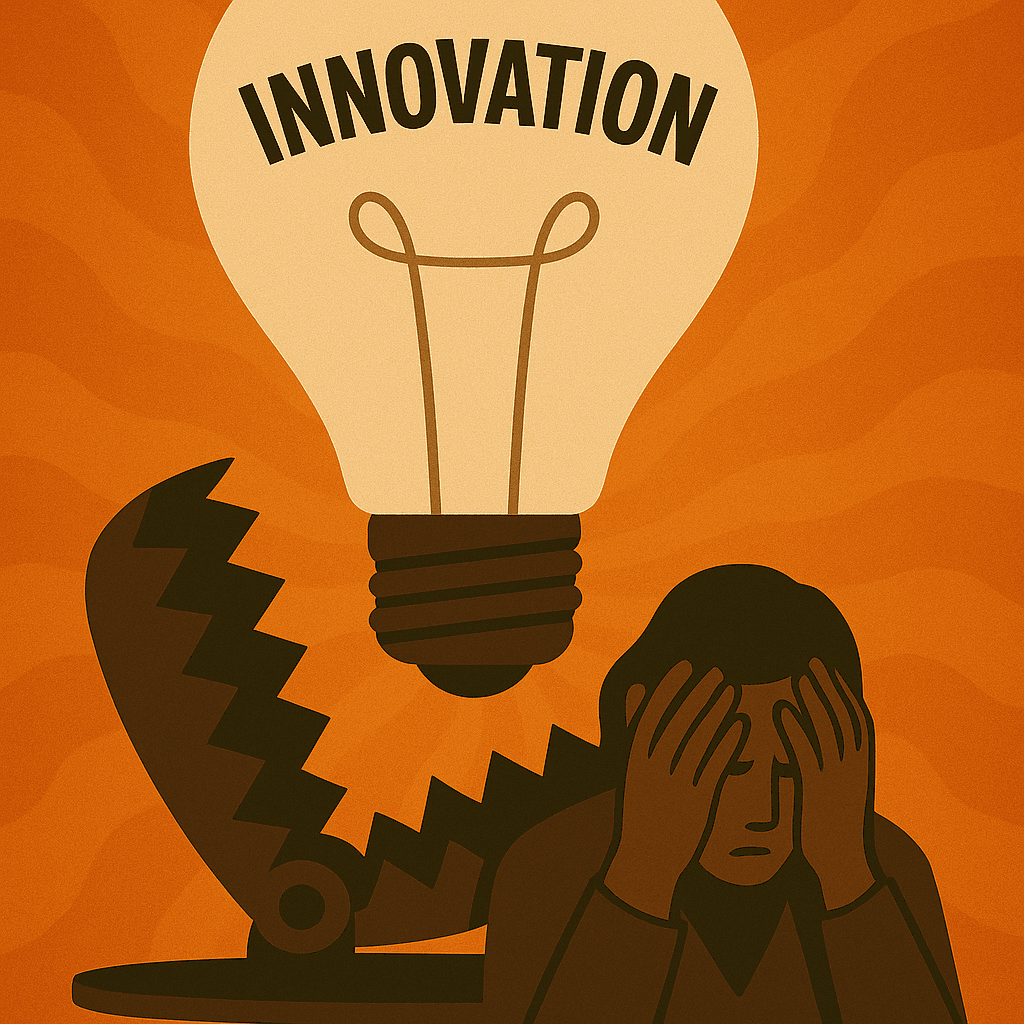
The answer isn't that these companies are incompetent or malicious. It's something more structural, more inevitable: They're trapped in what Harvard Business School professor Clayton Christensen calls "the innovator's dilemma."


They cannot build what we need because their very success prevents them from doing so.

If the problems with productivity tools are so obvious, fragmentation, surveillance, cognitive overload, acceleration, why don't the companies that make these tools fix them?


Google has brilliant engineers and virtually unlimited resources. Notion has raised hundreds of millions in venture capital. Microsoft, Apple, Asana, Todoist, all are staffed by talented people who genuinely want to help users be more productive.


So why do they keep building variations on the same fragmented tools? Why do new features add complexity rather than solving fundamental problems? Why does every "next generation" productivity app reproduce the same architectural flaws?


The answer isn't that these companies are incompetent or malicious. It's something more structural, more inevitable: They're trapped in what Harvard Business School professor Clayton Christensen calls "the innovator's dilemma."


They cannot build what we need because their very success prevents them from doing so.

Sustaining Innovation vs. Disruptive Innovation

Sustaining Innovation vs. Disruptive Innovation

Sustaining Innovation vs. Disruptive Innovation

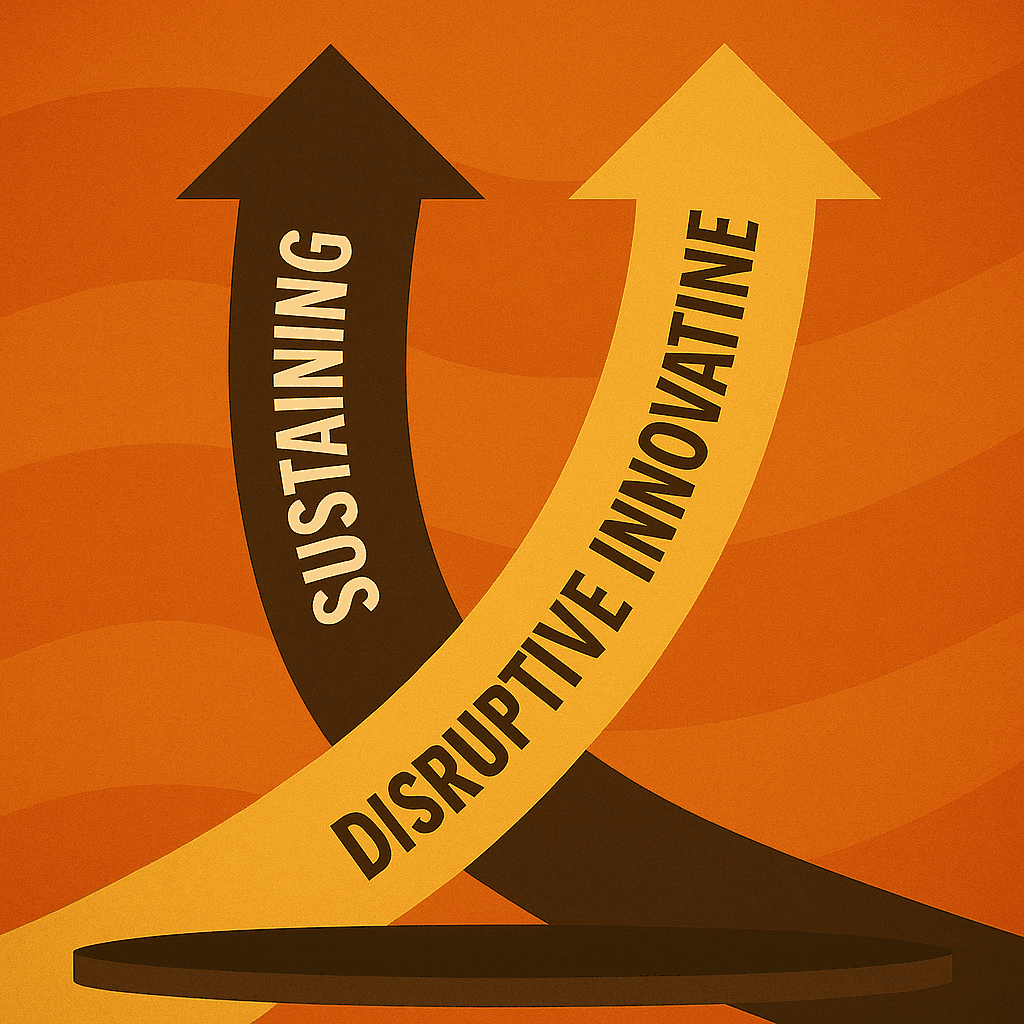
Christensen's groundbreaking research, documented in The Innovator's Dilemma, distinguishes between two fundamentally different types of innovation:


Sustaining Innovation improves existing products along dimensions that current customers value. It makes things faster, cheaper, more feature-rich, more convenient. It's what successful companies excel at.


Disruptive Innovation introduces new value propositions that initially serve different customer needs or create entirely new markets. It often performs worse on traditional metrics while being better on dimensions that incumbent customers don't yet value.


The dilemma: successful companies are structurally designed to pursue sustaining innovations and avoid disruptive ones, even when disruptive innovations better serve long-term customer needs.


This isn't stupidity. It's rational behavior given the incentives, resources, and organizational structures that made these companies successful in the first place.
Why Google Calendar Can't Become a Life Design Tool

Why Google Calendar Can't Become a Life Design Tool

Why Google Calendar Can't Become a Life Design Tool

Consider Google Calendar, probably the world's most widely used digital calendar with over 500 million active users.


Google employs thousands of talented engineers. They could, technically, rebuild Calendar around different architectural principles. They could add features for general time scheduling, visual planning, life area integration.


So why don't they?


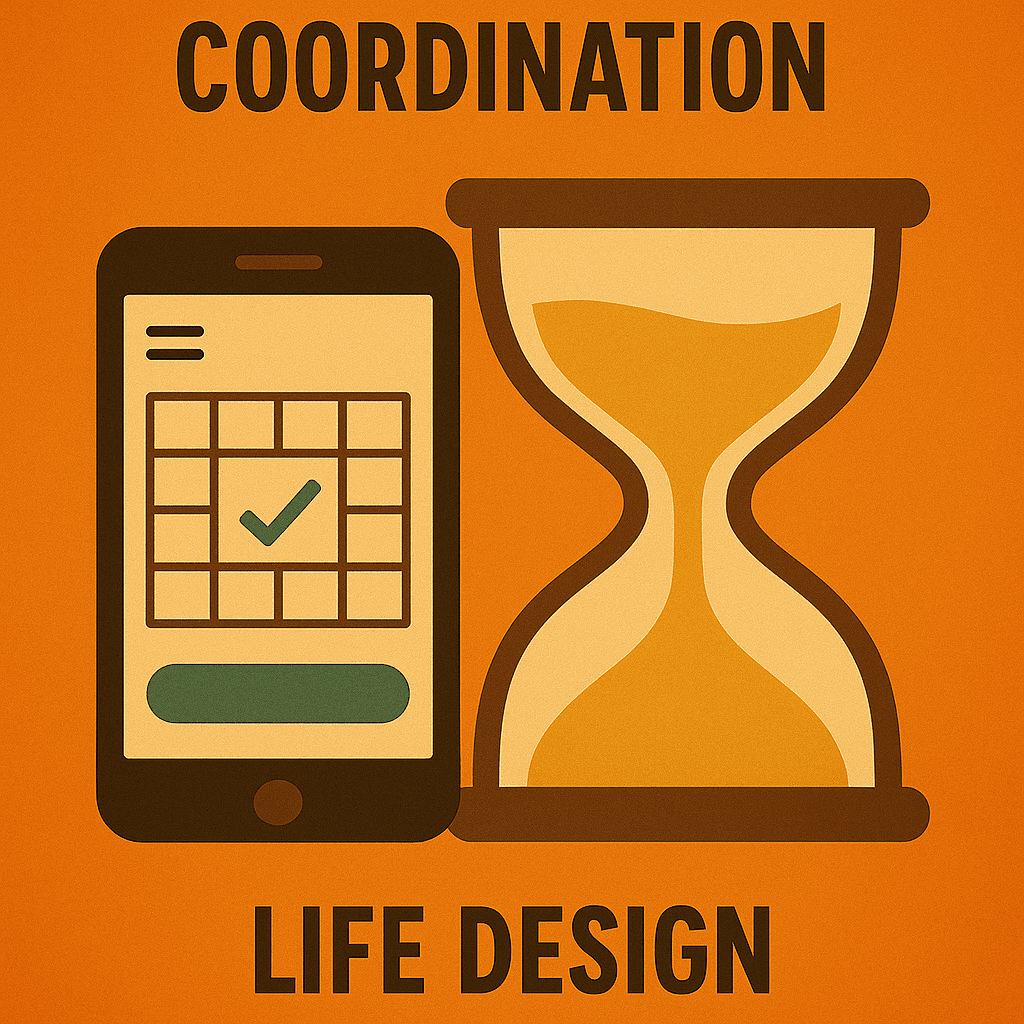
Because Google Calendar's success is precisely defined by what it does now: coordinating meetings across organizations with reliable synchronization, preventing double-booking, and integrating with enterprise communication systems.


Google's enterprise customers, the ones who actually pay, value these coordination features. They want better meeting scheduling, improved time zone handling, enhanced integration with Google Workspace.


If Google's Calendar team proposed: "Let's fundamentally rethink how calendars work to support human flourishing rather than just meeting coordination," they'd face several insurmountable barriers:


Resource Allocation: Engineering resources are allocated based on expected return on investment. Improving enterprise coordination features has clear, measurable ROI. Experimental life design features have uncertain value and no proven business model.


Customer Risk: Changing fundamental architecture risks alienating existing enterprise customers who depend on current functionality. A failed experiment could cost billions in revenue.


Success Metrics: Product teams are evaluated on engagement, retention, and revenue growth, all tied to current product paradigm. There are no metrics for "supporting human flourishing."


Technical Debt: Years of feature development have created massive technical dependencies. The entire system assumes calendar grids, discrete events, and coordination logic. Rebuilding from scratch would cost hundreds of millions.


Google Calendar cannot evolve into a life design tool because its success is built on being an excellent coordination tool. The better it becomes at coordination, the more locked into that paradigm it becomes.
Notion's Power-User Trap

Notion's Power-User Trap

Notion's Power-User Trap

Notion represents a different flavor of the same dilemma.


Notion raised over $340 million by offering remarkable flexibility, databases, pages, blocks that can be combined in countless ways. It's beloved by power users who can craft custom workflows.


But Notion's flexibility is also its limitation. The platform is optimized for information management by sophisticated users who enjoy system-building. It assumes users want to create their own organizational structures from modular components.


This works brilliantly for its current user base: tech workers, students, startups, people comfortable with complexity and willing to invest time in setup.


But integrated life design requires the opposite: simplicity, immediate usability, and focus on living rather than system-building.


Most people don't want to design their productivity system. They want to design their life. They need tools that fade into the background rather than demand constant attention and configuration.


If Notion simplified to serve mainstream life design needs, it would alienate the power users who made it successful. It would lose its differentiation. Revenue would decline. Investors would revolt.


Notion can't pivot to life design without destroying what made it valuable to its current customers.


The Business Model Trap

The Business Model Trap

The Business Model Trap

The innovator's dilemma compounds when business models misalign with user needs.


Most productivity tools make money through:


Subscription Models: Revenue depends on continued engagement. The more you use the tool, the more likely you'll renew. This creates incentives for features that increase usage time rather than features that help you spend less time in the tool.


Freemium Conversion: Free users must experience enough friction to upgrade to paid tiers. This requires artificial limitations that work against seamless integration.


Data Monetization: "Free" tools often profit from user data, either through advertising or selling behavioral insights. This requires surveillance capabilities that undermine user agency.


Enterprise Sales: The real customers are IT departments and procurement officers, not individual users. Products optimize for enterprise needs (security, administration, compliance) rather than user experience.


True life design tools would optimize for getting users off the platform and into their lives. They'd minimize time in the tool rather than maximize engagement. They'd integrate transparently rather than create upgrade friction.


This business model doesn't exist in the current productivity software market. Companies that tried it would be outcompeted by those optimizing for engagement and upgrades.

The innovator's dilemma compounds when business models misalign with user needs.


Most productivity tools make money through:


Subscription Models: Revenue depends on continued engagement. The more you use the tool, the more likely you'll renew. This creates incentives for features that increase usage time rather than features that help you spend less time in the tool.


Freemium Conversion: Free users must experience enough friction to upgrade to paid tiers. This requires artificial limitations that work against seamless integration.


Data Monetization: "Free" tools often profit from user data, either through advertising or selling behavioral insights. This requires surveillance capabilities that undermine user agency.


Enterprise Sales: The real customers are IT departments and procurement officers, not individual users. Products optimize for enterprise needs (security, administration, compliance) rather than user experience.


True life design tools would optimize for getting users off the platform and into their lives. They'd minimize time in the tool rather than maximize engagement. They'd integrate transparently rather than create upgrade friction.


This business model doesn't exist in the current productivity software market. Companies that tried it would be outcompeted by those optimizing for engagement and upgrades.

The Feature Creep Death Spiral

The Feature Creep Death Spiral

The Feature Creep Death Spiral

Successful productivity tools fall into what we might call the "feature creep death spiral":


Year 1: Launch with simple, focused functionality. Users love the simplicity.


Year 2: Competitors appear. Must differentiate through new features. Add capabilities users request.


Year 3: More competitors. More features needed. Each feature adds complexity. Original simplicity erodes.


Year 4: Now a "mature product" with hundreds of features. New users are overwhelmed. Power users are entrenched. Cannot remove features without angering someone.


Year 5+: Trapped between competing needs: power users want more features, new users want simplicity, enterprise customers want customization. Every added feature makes the fundamental problems worse.


You see this pattern in every mature productivity tool. Each started simple and focused. Each became complex and bloated through rational responses to competitive pressure and customer requests.


Nobody intended this outcome. But the structure of competition and growth forced it.

The Platform Lock-In Strategy

The Platform Lock-In Strategy

The Platform Lock-In Strategy

Productivity companies face another structural barrier: their success depends on ecosystem lock-in, which works against the integration users need.


Google wants you using Gmail, Calendar, Drive, Docs, Keep, Tasks, all their tools together. Microsoft pushes the Office suite. Notion encourages putting everything in their workspace.


This creates switching costs that protect revenue. Once you've invested time building systems in one ecosystem, moving to another is painful. The tools are designed to make switching costly.


But true integration would reduce switching costs. It would enable easy migration between tools, interoperability across platforms, and data portability. This serves users but undermines business models.


Companies profit from ecosystem lock-in. Users suffer from inability to integrate tools from different vendors. These interests directly oppose each other.

The productivity paradox has reached a critical point where fragmentation's cost has become unsustainable.


The World Health Organization now recognizes that mental health is not merely the absence of illness but the presence of positive characteristics like life satisfaction, optimism, and sense of purpose—qualities emerging from how people structure daily life, not from task completion efficiency.


Burnout has reached epidemic levels. The surgeon general has declared loneliness a public health crisis. People report feeling simultaneously overscheduled and disconnected, busy and unfulfilled.


These aren't separate problems from the productivity paradox, they're symptoms of the same issue: our digital tools fragment rather than integrate the human experience of living.

Why Startups Fail to Disrupt

Why Startups Fail to Disrupt

Why Startups Fail to Disrupt

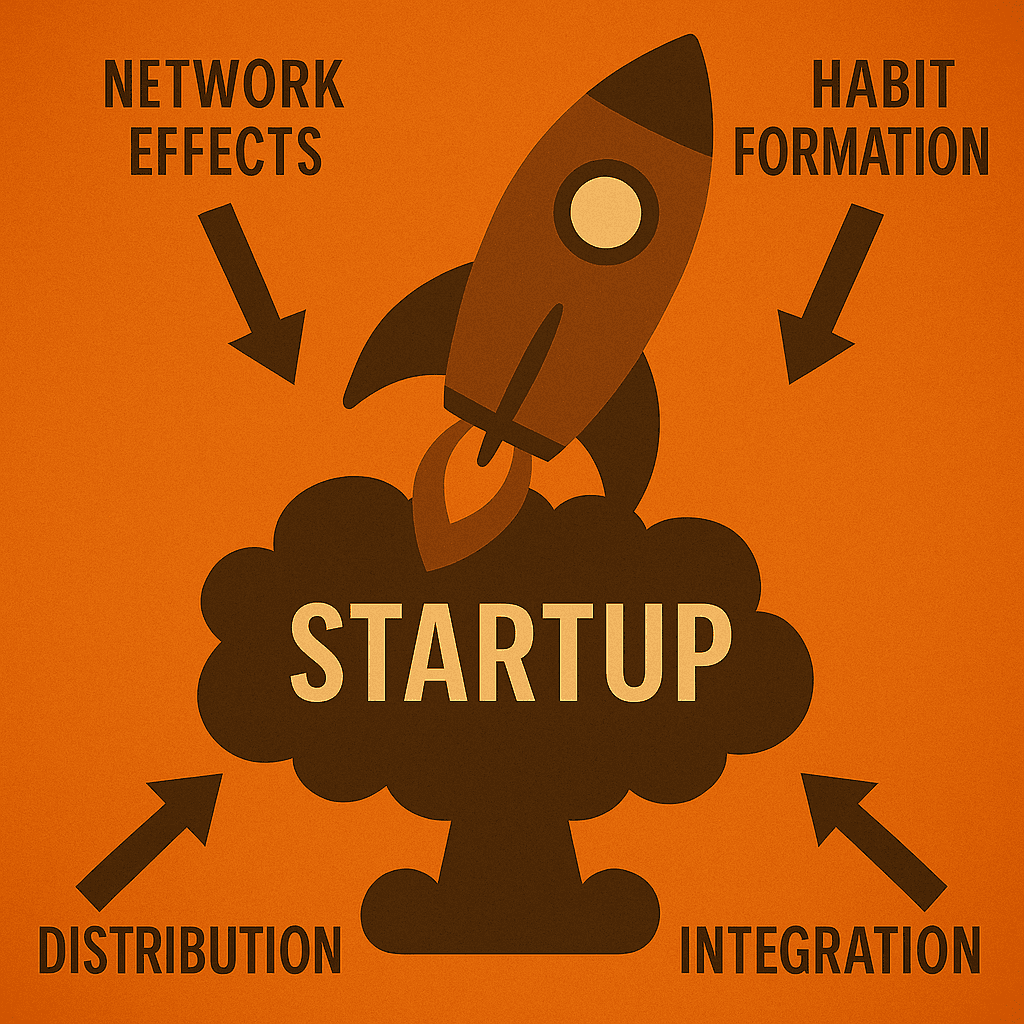
You might think: "If established companies can't innovate, won't startups disrupt them?"


Sometimes. But the productivity tool market has proven resistant to disruption for structural reasons:


Network Effects: Productivity tools that require collaboration (calendars, project management) benefit from network effects. The tool is more valuable when more people use it. This creates winner-take-all dynamics that favor incumbents.


Integration Requirements: New tools must integrate with existing systems (email, calendars, file storage) to be useful. This integration effort creates barriers to entry that favor established players with resources for multiple integrations.


Habit Formation: Productivity tools become habitual. People resist switching even to better alternatives because the learning curve feels costly. Behavioral economics research shows status quo bias is particularly strong for everyday tools.


Distribution Advantages: Established companies have distribution through enterprise relationships, app store positioning, and marketing budgets that startups cannot match.


Talent Acquisition: The best engineers often join established companies with clear career paths and stability rather than risky productivity startups.


Customer Education: Disruptive innovations require educating customers about new value propositions. Most users default to familiar paradigms rather than learning new approaches.


These structural barriers explain why the productivity tool landscape has remained relatively stable despite dozens of well-funded startups attempting disruption.

The productivity paradox has reached a critical point where fragmentation's cost has become unsustainable.


The World Health Organization now recognizes that mental health is not merely the absence of illness but the presence of positive characteristics like life satisfaction, optimism, and sense of purpose—qualities emerging from how people structure daily life, not from task completion efficiency.


Burnout has reached epidemic levels. The surgeon general has declared loneliness a public health crisis. People report feeling simultaneously overscheduled and disconnected, busy and unfulfilled.


These aren't separate problems from the productivity paradox, they're symptoms of the same issue: our digital tools fragment rather than integrate the human experience of living.

The Architecture is Irreplaceable

The Architecture is Irreplaceable

The Architecture is Irreplaceable

Perhaps the deepest barrier: the fundamental architecture of current productivity tools cannot be retrofitted for integration.


Each tool was designed around specific data models:

  • Calendars: discrete events with start/end times

  • Tasks: items with binary completion states

  • Notes: hierarchical documents

  • Communication: message threads


These data models are fundamentally incompatible. You can't integrate them without completely rebuilding from scratch, which means abandoning the existing product and its customers.


It's like trying to turn a car into an airplane by adding wings. The fundamental architecture wasn't designed for flight. You can't retrofit it. You need to build something different from the ground up.

The productivity paradox has reached a critical point where fragmentation's cost has become unsustainable.


The World Health Organization now recognizes that mental health is not merely the absence of illness but the presence of positive characteristics like life satisfaction, optimism, and sense of purpose—qualities emerging from how people structure daily life, not from task completion efficiency.


Burnout has reached epidemic levels. The surgeon general has declared loneliness a public health crisis. People report feeling simultaneously overscheduled and disconnected, busy and unfulfilled.


These aren't separate problems from the productivity paradox, they're symptoms of the same issue: our digital tools fragment rather than integrate the human experience of living.

The Talent Trap

The Talent Trap

The Talent Trap

Companies are also constrained by the talent and expertise they've accumulated.


Google's Calendar team consists of people excellent at building coordination tools. Notion's team excels at flexible database systems. Asana's team specializes in project management.


Asking these teams to build life design technology is like asking automotive engineers to design aircraft. The skills don't directly transfer. The mental models are different. The evaluation criteria are unfamiliar.


Companies hire and promote people good at sustaining innovation. They don't have people good at disruptive innovation because those people don't fit within successful company structures.


When companies try to innovate disruptively, they often fail because they're using the wrong talent, wrong processes, and wrong evaluation criteria.

The productivity paradox has reached a critical point where fragmentation's cost has become unsustainable.


The World Health Organization now recognizes that mental health is not merely the absence of illness but the presence of positive characteristics like life satisfaction, optimism, and sense of purpose—qualities emerging from how people structure daily life, not from task completion efficiency.


Burnout has reached epidemic levels. The surgeon general has declared loneliness a public health crisis. People report feeling simultaneously overscheduled and disconnected, busy and unfulfilled.


These aren't separate problems from the productivity paradox, they're symptoms of the same issue: our digital tools fragment rather than integrate the human experience of living.

The Investor Pressure Problem

The Investor Pressure Problem

The Investor Pressure Problem

For venture-backed productivity startups, investor expectations create additional constraints.


VCs invest expecting exponential growth and eventual exits (acquisition or IPO). This requires:

  • Rapid user acquisition

  • High engagement metrics

  • Clear path to monetization

  • Defensible market position


These requirements push startups toward sustaining innovations in existing markets rather than risky category creation that might take years to validate.


A startup proposing to create an entirely new category of "life design technology" faces skeptical investors asking: "Why not just build a better calendar/task-manager/note-app? Those markets are proven. Your approach is risky and unproven."


Most entrepreneurs take the safer path because funding depends on it.

The productivity paradox has reached a critical point where fragmentation's cost has become unsustainable.


The World Health Organization now recognizes that mental health is not merely the absence of illness but the presence of positive characteristics like life satisfaction, optimism, and sense of purpose—qualities emerging from how people structure daily life, not from task completion efficiency.


Burnout has reached epidemic levels. The surgeon general has declared loneliness a public health crisis. People report feeling simultaneously overscheduled and disconnected, busy and unfulfilled.


These aren't separate problems from the productivity paradox, they're symptoms of the same issue: our digital tools fragment rather than integrate the human experience of living.

When Disruption Becomes the Only Path

When Disruption Becomes the Only Path

When Disruption Becomes the Only Path

Christensen's research shows that disruption usually comes from:


New entrants unencumbered by existing success
Different markets initially dismissed by incumbents
New value propositions that established metrics don't measure
Architectural changes impossible to achieve through incremental improvement


This is why breakthrough innovation rarely comes from market leaders, no matter how smart, well-funded, or well-intentioned they are.


The structure of success prevents the very changes that would serve users better.

The productivity paradox has reached a critical point where fragmentation's cost has become unsustainable.


The World Health Organization now recognizes that mental health is not merely the absence of illness but the presence of positive characteristics like life satisfaction, optimism, and sense of purpose—qualities emerging from how people structure daily life, not from task completion efficiency.


Burnout has reached epidemic levels. The surgeon general has declared loneliness a public health crisis. People report feeling simultaneously overscheduled and disconnected, busy and unfulfilled.


These aren't separate problems from the productivity paradox, they're symptoms of the same issue: our digital tools fragment rather than integrate the human experience of living.

The Category Creation Imperative

The Category Creation Imperative

The Category Creation Imperative

This analysis reveals why incremental improvements to productivity tools cannot solve the fundamental problems we've explored throughout this series.


Fragmentation, surveillance, cognitive overload, acceleration, these aren't bugs to be fixed with better features. They're consequences of architectural choices and business models that make current tools successful.


You cannot solve these problems by:

  • Adding integration features to fragmented tools

  • Implementing privacy controls in surveillance-based systems

  • Reducing cognitive load in tools optimized for engagement

  • Slowing down products that profit from acceleration


The problems are structural. The solutions require different structures.


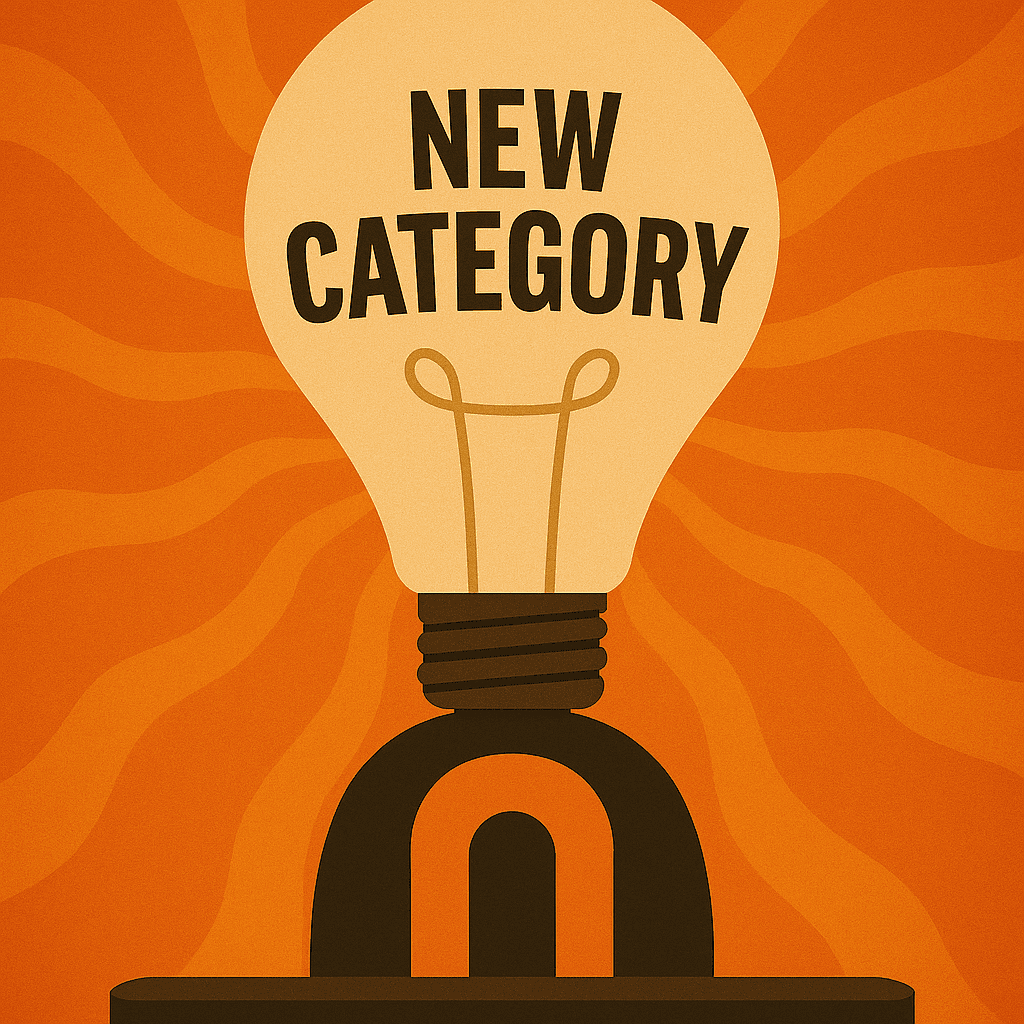
This is what Christensen calls "disruptive innovation", not just better products, but different categories built on different principles for different value propositions.

The productivity paradox has reached a critical point where fragmentation's cost has become unsustainable.


The World Health Organization now recognizes that mental health is not merely the absence of illness but the presence of positive characteristics like life satisfaction, optimism, and sense of purpose—qualities emerging from how people structure daily life, not from task completion efficiency.


Burnout has reached epidemic levels. The surgeon general has declared loneliness a public health crisis. People report feeling simultaneously overscheduled and disconnected, busy and unfulfilled.


These aren't separate problems from the productivity paradox, they're symptoms of the same issue: our digital tools fragment rather than integrate the human experience of living.

What This Means for the Path Forward

What This Means for the Path Forward

What This Means for the Path Forward

The innovation dilemma explains why waiting for Google, Microsoft, Notion, or any other established player to solve these problems is futile.


It's not that they won't. They can't, not because they lack talent or resources, but because their structure prevents it.


True solutions require:

  • New architectural foundations (not retrofits)

  • New business models (not subscription optimization)

  • New evaluation criteria (flourishing over engagement)

  • New category creation (not market competition)


This is simultaneously daunting and liberating. Daunting because it means the problems won't fix themselves. Liberating because it means the space is open for genuinely different approaches.


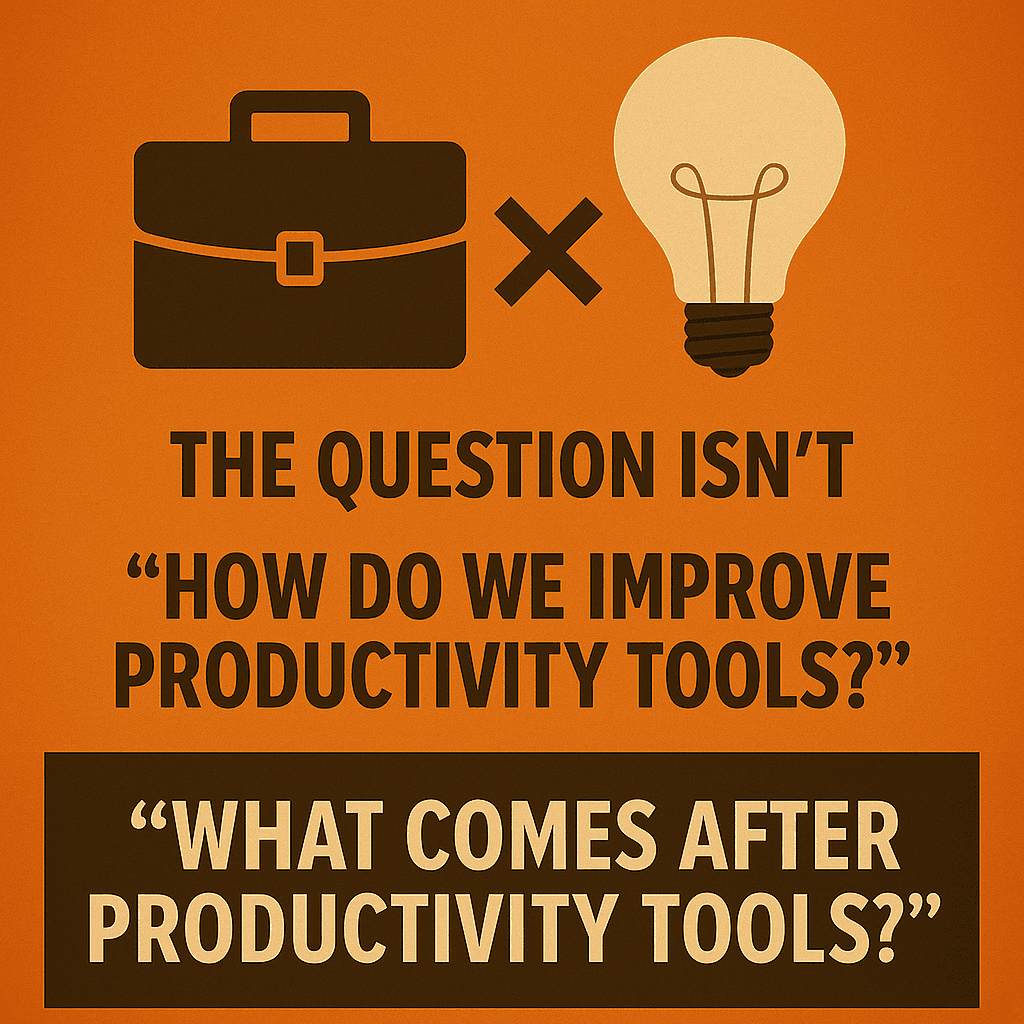
The question isn't "How do we improve productivity tools?" It's "What comes after productivity tools?"


We're ready to start answering that question.

The productivity paradox has reached a critical point where fragmentation's cost has become unsustainable.


The World Health Organization now recognizes that mental health is not merely the absence of illness but the presence of positive characteristics like life satisfaction, optimism, and sense of purpose—qualities emerging from how people structure daily life, not from task completion efficiency.


Burnout has reached epidemic levels. The surgeon general has declared loneliness a public health crisis. People report feeling simultaneously overscheduled and disconnected, busy and unfulfilled.


These aren't separate problems from the productivity paradox, they're symptoms of the same issue: our digital tools fragment rather than integrate the human experience of living.

This is Article 8 in a 12-part series exploring why we need a new category of technology, Life Design, to replace productivity tools that fragment rather than integrate our lives.

This is Article 8 in a 12-part series exploring why we need a new category of technology, Life Design, to replace productivity tools that fragment rather than integrate our lives.

Reserve Your Beta Access

& Join The Conversation Now

Signing up puts you first in line for our private beta app when we launch. Until then, you'll receive weekly insights as we prepare: sharp critiques of productivity culture, philosophical explorations of time and human experience, and glimpses into what we're building. Be part of the conversation from the beginning.

Made with ❤️ for Life Design.

Reserve Your Beta Access

& Join The Conversation Now

Signing up puts you first in line for our private beta app when we launch. Until then, you'll receive weekly insights as we prepare: sharp critiques of productivity culture, philosophical explorations of time and human experience, and glimpses into what we're building. Be part of the conversation from the beginning.

Made with ❤️ for Life Design.

Reserve Your Beta Access

& Join The Conversation Now

Signing up puts you first in line for our private beta app when we launch. Until then, you'll receive weekly insights as we prepare: sharp critiques of productivity culture, philosophical explorations of time and human experience, and glimpses into what we're building. Be part of the conversation from the beginning.

Reserve Your Beta Access

& Join The Conversation Now

Signing up puts you first in line for our private beta app when we launch. Until then, you'll receive weekly insights as we prepare: sharp critiques of productivity culture, philosophical explorations of time and human experience, and glimpses into what we're building. Be part of the conversation from the beginning.

Made with ❤️ for Life Design.