The Social Acceleration Trap

Robert Kenfield | 6 mins read | November 26, 2025
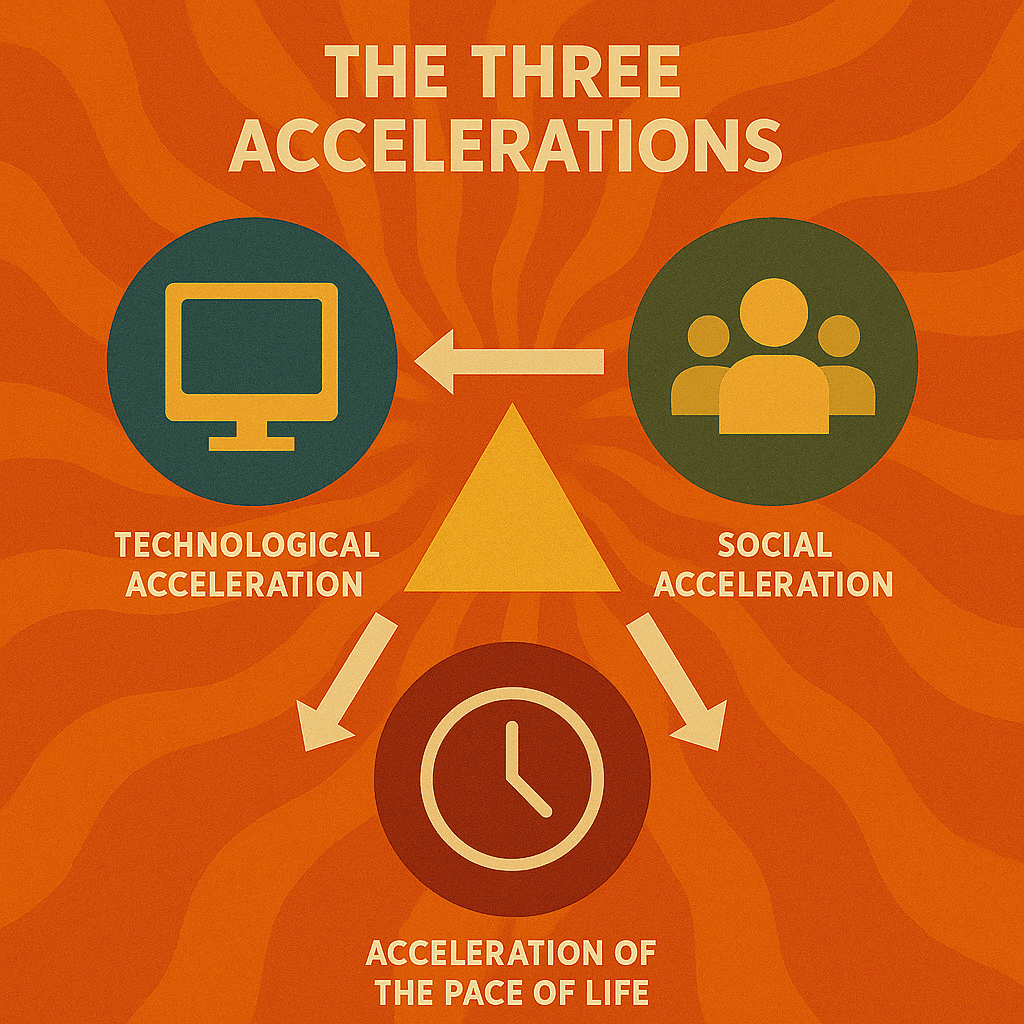
Rosa identifies three distinct but interconnected accelerations that define modern life, each amplifying the others:
1. Technological Acceleration
This is the obvious one: technology gets faster. Computers process information more quickly. Communication happens instantly. Manufacturing speeds up. Transportation moves faster.
Each generation of technology promises to save time. And in isolated, measurable ways, it does. Sending an email takes seconds compared to posting a letter.
But here's the trap: technological acceleration doesn't create free time, it raises expectations for how quickly things should happen.
When mail took three days, people expected three-day response times. When email arrives instantly, people expect instant responses. The time saved by the technology gets consumed by the new expectations the technology creates.
Worse, faster technology enables more activities in the same time span. You don't use email to send one message faster, you send fifty messages in the time you would have sent one letter.
Technological acceleration doesn't free time. It compresses more activity into the same temporal space, creating what Rosa calls "temporal density", more happening in less time.
2. Social Acceleration
Technology doesn't just accelerate in isolation, it accelerates the pace of social change itself.
Career trajectories that once lasted decades now shift every few years. Skills become obsolete faster. Relationships form and dissolve more rapidly. Where you live, what you do, who you know, all more fluid, more changeable, less stable than for previous generations.
This isn't just anecdote, it's measurable. The average job tenure has declined continuously over decades. Geographic mobility has increased. The pace of fashion cycles, cultural trends, and social norms has accelerated.
This social acceleration creates what Rosa calls "the experience of the present as a constant transition", you're always adapting to change rather than inhabiting stability.
The psychological impact is profound. When social structures were stable, you could develop skills, relationships, and knowledge that remained relevant for decades. Now, everything feels provisional, temporary, subject to disruption.
Your productivity tools reflect this: built for flexibility, agility, constant adjustment. They're not designed to support stable, long-term practices, they're designed for continuous adaptation to accelerating change.
3. The Acceleration of the Pace of Life
The first two accelerations combine to create a third: the subjective experience that life itself has sped up.
You feel constantly rushed, perpetually behind, never quite catching up. There's always more to do than time available. The to-do list never empties. The inbox never reaches zero. The calendar never has white space.
This isn't because you're disorganized or inefficient. It's because technological acceleration and social acceleration compound to create ever-increasing demands on your time and attention.
Rosa conducted surveys across multiple countries asking people whether they felt they had "enough time" for various activities. The results were striking: despite massive increases in productivity and time-saving technology, people consistently report having less free time and feeling more time pressure than previous generations.
The paradox resolves when you understand that time-saving technology doesn't actually save time, it raises the baseline for what counts as "keeping up."
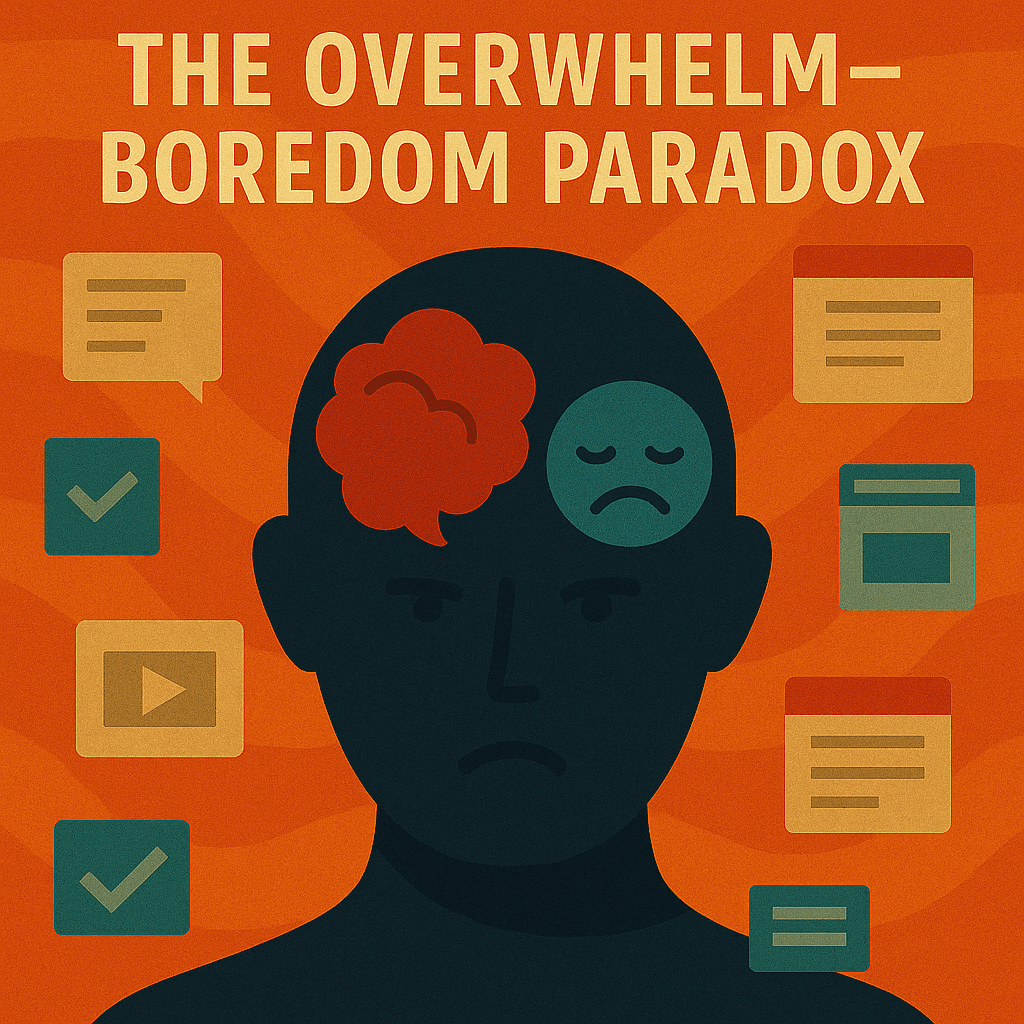
Rosa's most provocative concept is what he calls "frenetic standstill", the paradoxical experience of constant busyness that doesn't feel like meaningful progress.
You're always doing something. Your calendar is full. Your task list is active. You're responding, processing, executing. Busy, busy, busy.
Yet at the end of the week, the month, the year, you struggle to identify what actually changed, what actually advanced, what meaningful progress occurred.
The acceleration creates motion without direction, activity without achievement, busyness without purpose.
This explains the psychological exhaustion so many people feel: you're working harder than ever, using more productivity tools than ever, and feeling less accomplished than ever.
The tools that promised to free your time have trapped you in frenetic standstill.

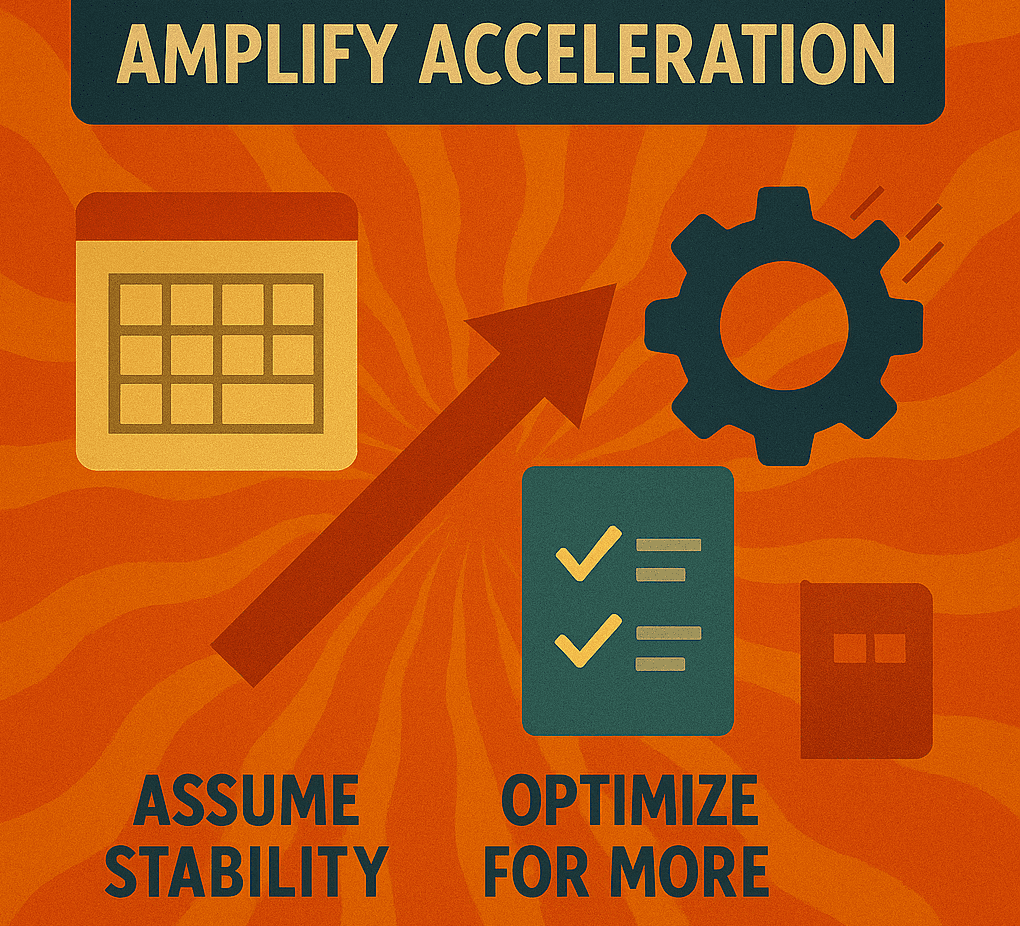
Current productivity tools don't solve the acceleration problem, they're designed around assumptions that amplify it.
They Assume Stability: Traditional planning assumes that plans, once made, remain relevant. But in accelerated contexts, detailed long-term planning creates rigidity that impedes adaptation. By the time you've planned out your week, circumstances have changed.
Your calendar and task list operate as if the future were predictable. But in accelerated reality, the future is radically uncertain. The tools can't handle this mismatch, so they make acceleration feel like your personal failure to "stay organized."
They Optimize for More: Productivity tools measure success by completion rates, filled calendars, checked boxes. They're built on the assumption that doing more is better.
But in accelerated contexts, doing more often means doing less well. Quality suffers. Attention fragments. Meaning erodes.
The tools can't distinguish between meaningful progress and frenetic motion because they weren't designed to. They optimize quantity over quality, activity over impact, busyness over purpose.
They Fragment Rather Than Integrate: As we've explored in previous articles, productivity tools scatter information across incompatible systems. This fragmentation compounds acceleration's effects.
In stable contexts, you could build reliable systems and workflows. In accelerated contexts, you're constantly rebuilding, readjusting, relearning. The tools that should buffer against acceleration instead amplify its disruptive effects.
Rosa's work connects to what epidemiologist Geoffrey Rose called the "prevention paradox" in public health: it's more effective to create conditions that support wellbeing for everyone than to treat problems after they develop in individuals.
Applied to time and acceleration: rather than helping individuals "manage time better" within accelerated contexts, we need to question and resist acceleration itself.
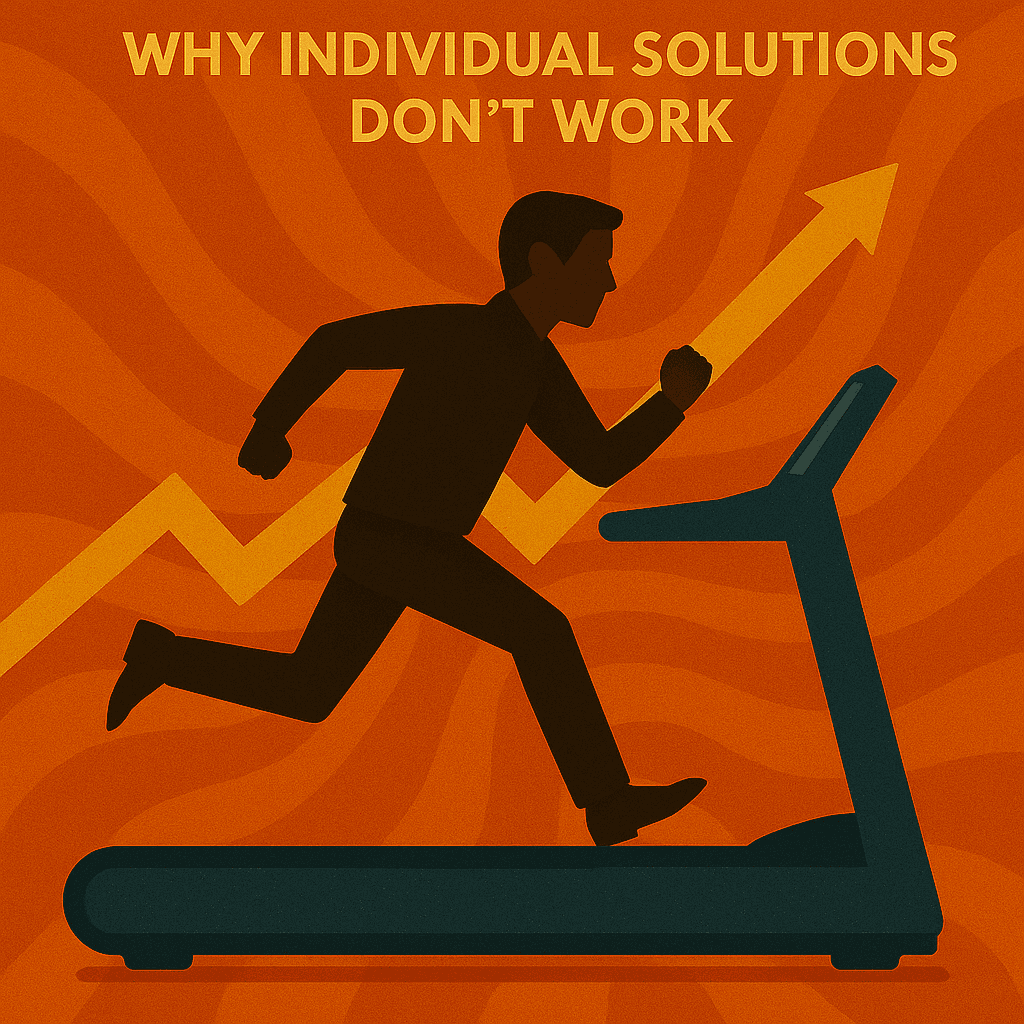
This is why productivity tools that focus on individual optimization miss the point. They teach you to pack more into accelerated time rather than questioning why time has accelerated in the first place.
It's like optimizing your running technique while the treadmill speed keeps increasing. Eventually, you can't run fast enough no matter how optimized your form.
The problem isn't your technique. The problem is the accelerating treadmill.