Time Freedom

Robert Kenfield | 7 mins read | December 23, 2025
Chronobiology, the scientific study of biological rhythms, has established something that calendar grids ignore: human performance varies dramatically and predictably throughout each 24-hour cycle.
This isn't about personal preference or habit. It's about biology.
Your body operates on what researchers call the circadian clock, an internal timekeeper regulated by a cluster of about 20,000 neurons in your hypothalamus. This biological clock coordinates virtually every physiological system according to a roughly 24-hour cycle.
The effects are measurable and significant:
Cognitive Performance: Your ability to focus, solve complex problems, and make decisions varies by as much as 20-30% across different times of day, depending on your chronotype (genetic predisposition toward morning or evening peak performance).
Physical Performance: Body temperature, muscle strength, and cardiovascular efficiency follow daily curves. Olympic athletes adjust training schedules around these rhythms to maximize performance.
Reaction Time: Speed and accuracy on tasks requiring quick responses vary systematically throughout the day, with peaks and troughs following circadian patterns.
Mood and Emotion: Emotional regulation, stress response, and subjective wellbeing fluctuate with circadian phase, independent of what's actually happening in your life.
These aren't small variations. The difference in your cognitive capability between your biological peak and trough can be equivalent to the impairment from moderate sleep deprivation.
Yet calendar grids treat all hours as equivalent.
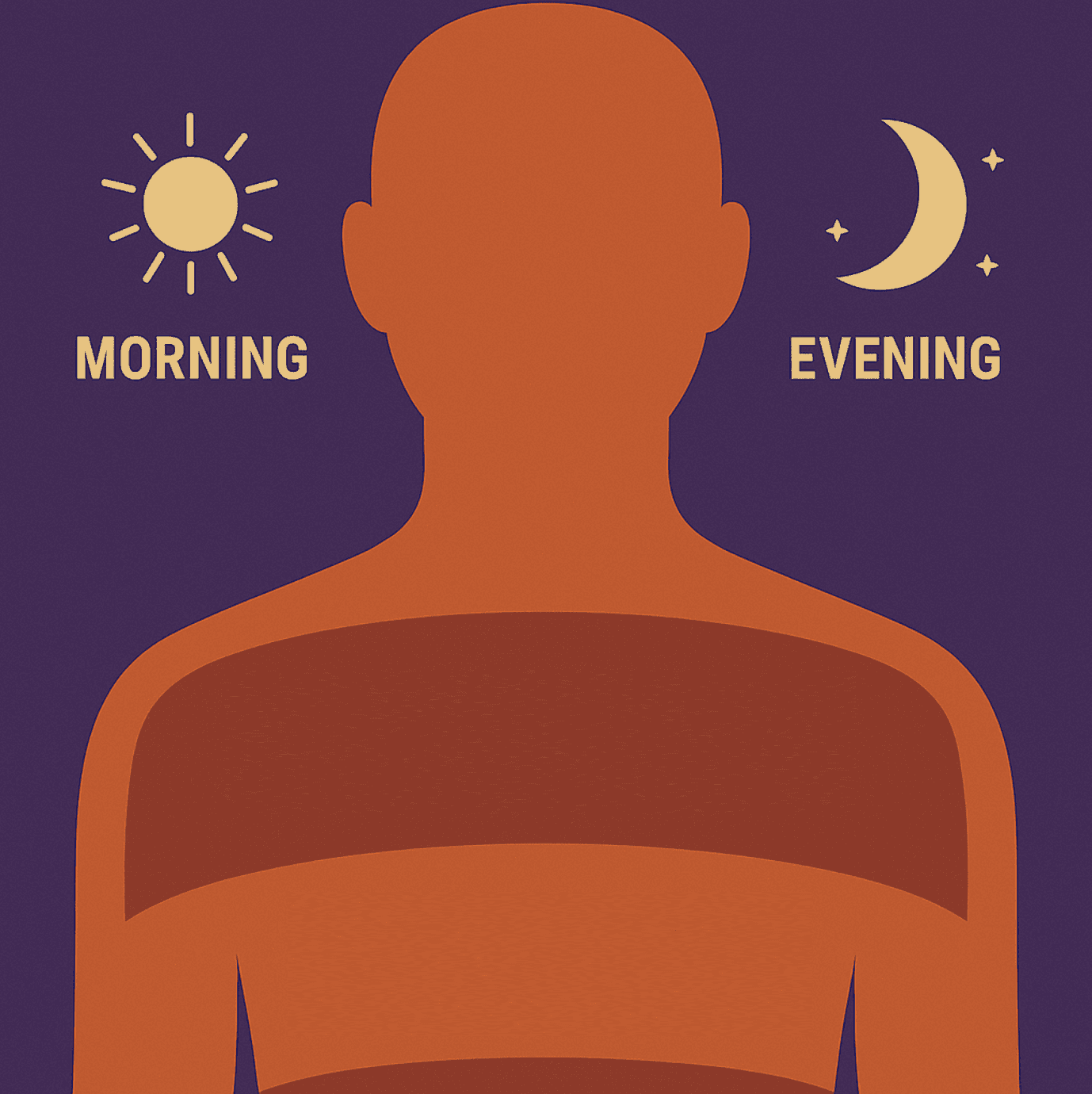
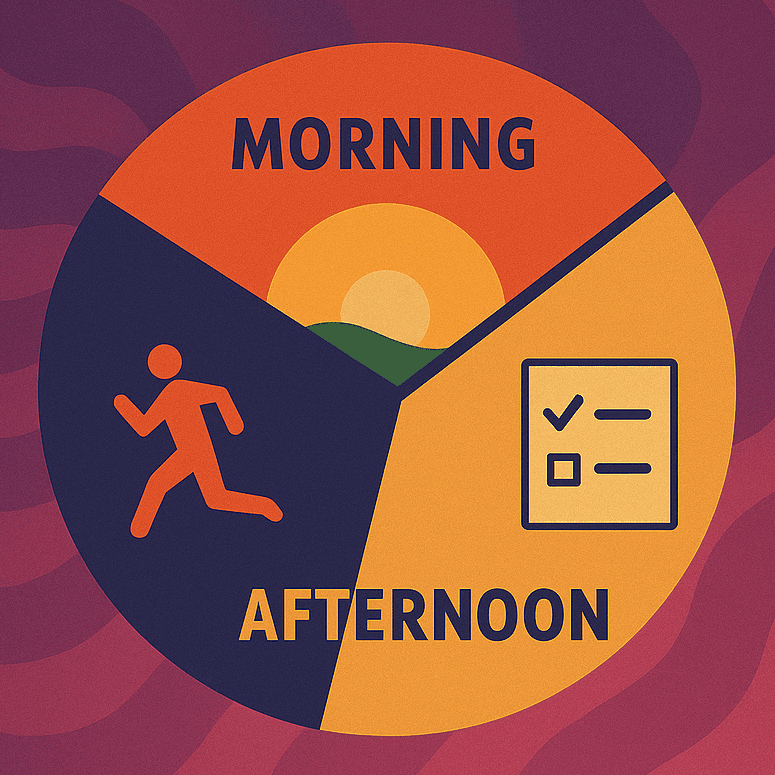
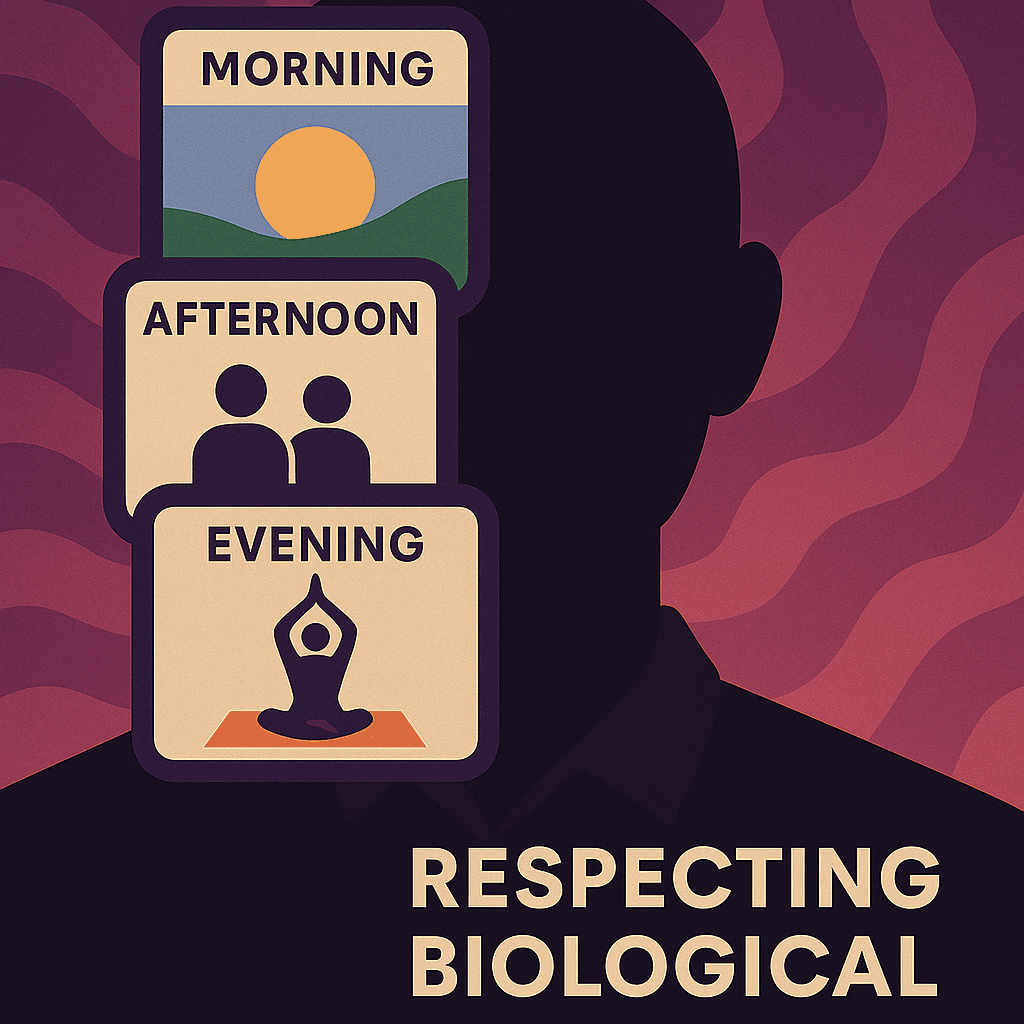
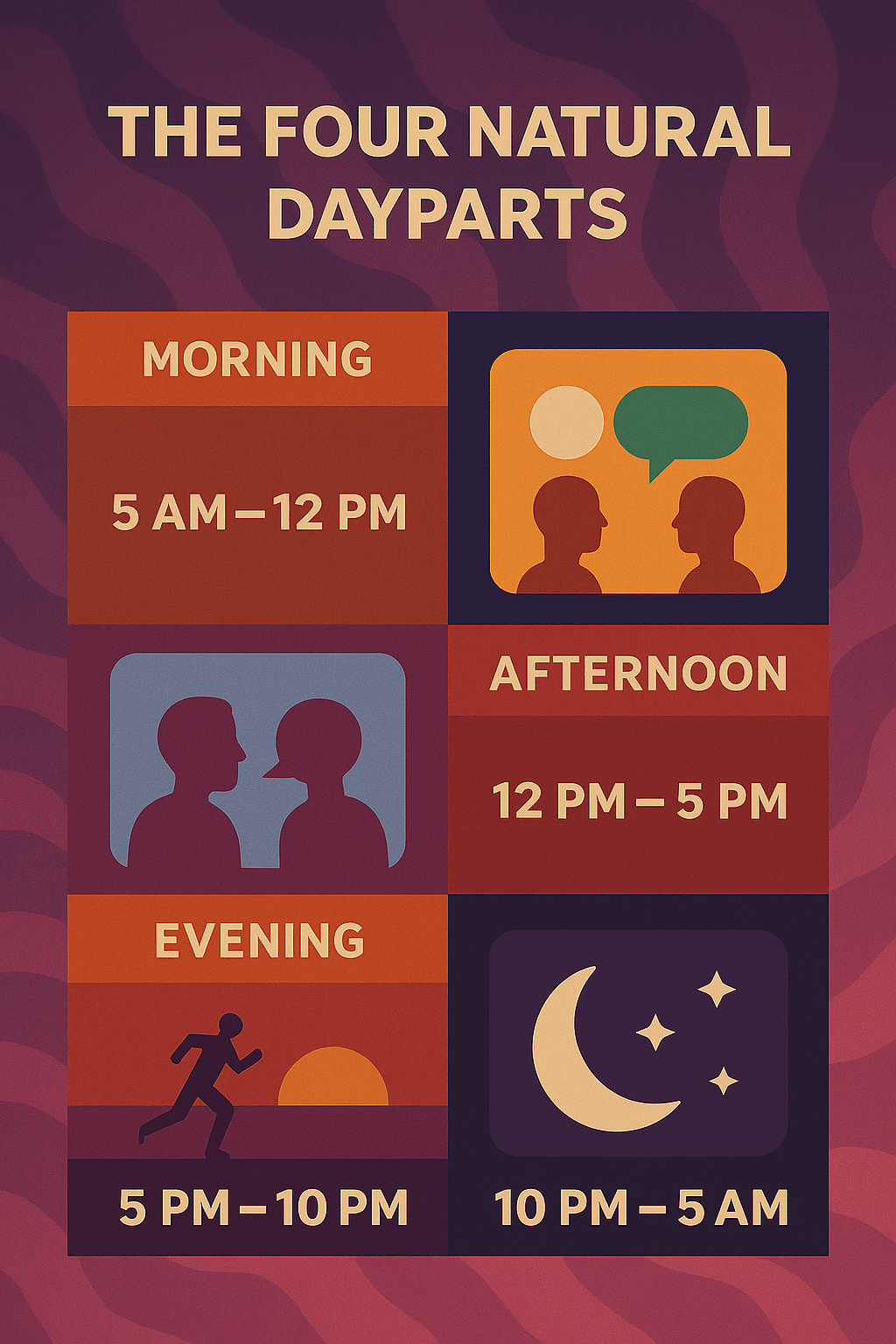
Rather than arbitrary hour divisions, human experience naturally organizes around what we might call "dayparts", periods defined by biological state and natural energy patterns.
Morning (Roughly 5 AM - 12 PM)
Biological State: Cortisol levels peak shortly after waking, your body's natural alarm system providing energy and alertness. Body temperature rises steadily. The brain's prefrontal cortex (responsible for complex thinking) is optimally activated.
Optimal Activities: Demanding cognitive work, important decisions, learning new skills, creative problem-solving. Research consistently shows that most people perform best on analytically demanding tasks during morning hours.
What This Means: This is your biological window for hard things, the work that requires sustained focus, complex analysis, or creative synthesis. Spending morning on email and meetings wastes your best cognitive hours.
Afternoon (Roughly 12 PM - 5 PM)
Biological State: Post-lunch circadian dip (the "afternoon slump") typically occurs between 1-3 PM, regardless of whether you ate lunch. This is followed by a secondary peak in alertness. Social energy and interpersonal engagement capacity tend to be highest during this period.
Optimal Activities: Collaborative work, meetings, routine tasks that don't require peak cognitive performance, social interaction, administrative work. The post-lunch dip is actually ideal for creative insight (when you're slightly mentally foggy, unusual connections emerge more easily).
What This Means: Afternoon is for people work and routine execution, not for your most demanding cognitive challenges. Plan accordingly.
Evening (Roughly 5 PM - 10 PM)
Biological State: Body temperature peaks (typically around 7 PM), making this the optimal time for physical coordination and strength. Cognitive performance declines for analytical work but can remain strong for familiar, practiced activities. Emotional and relational presence often peaks during this window.
Optimal Activities: Exercise, physical activities, family time, relationship connection, creative pursuits that don't require intense concentration, preparing for the next day. Athletic performance peaks in early evening for most people.
What This Means: Evening is for body and relationships, not for starting new analytical projects or making important decisions (unless you're a strong evening chronotype).
Night (Roughly 10 PM - 5 AM)
Biological State: Melatonin production increases, body temperature drops, cognitive performance declines sharply. The brain shifts into maintenance mode, consolidating memories, clearing metabolic waste, repairing cellular damage.
Optimal Activities: Sleep, rest, recovery, light reading, reflection, winding down. Fighting these biological signals (staying alert late) has documented health costs.
What This Means: Night is for restoration, not productivity. The body needs this downtime for physical and cognitive recovery.
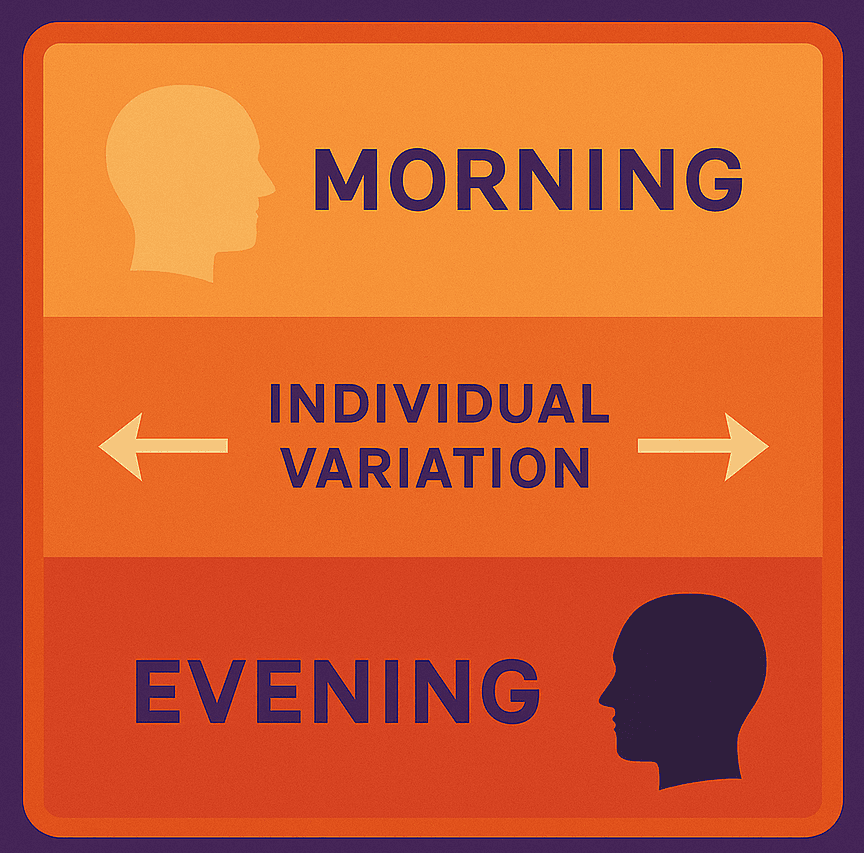
These patterns aren't identical for everyone. Genetic variation creates what researchers call "chronotypes", individual differences in circadian timing.
About 40% of people are "intermediate" chronotypes with moderate flexibility. But roughly 30% are strong "morning types" (larks) and 30% are strong "evening types" (owls), with peak performance shifted earlier or later by 2-3 hours.
A morning type might experience their cognitive peak at 8 AM, while an evening type doesn't hit their stride until 11 AM or noon. Forcing both into the same schedule ignores biological reality.
The industrial 9-to-5 workday was designed for organizational coordination, not human biology. It happens to align reasonably well with morning chronotypes, but systematically disadvantages evening types, who perform worse on cognitive tasks during early morning hours.
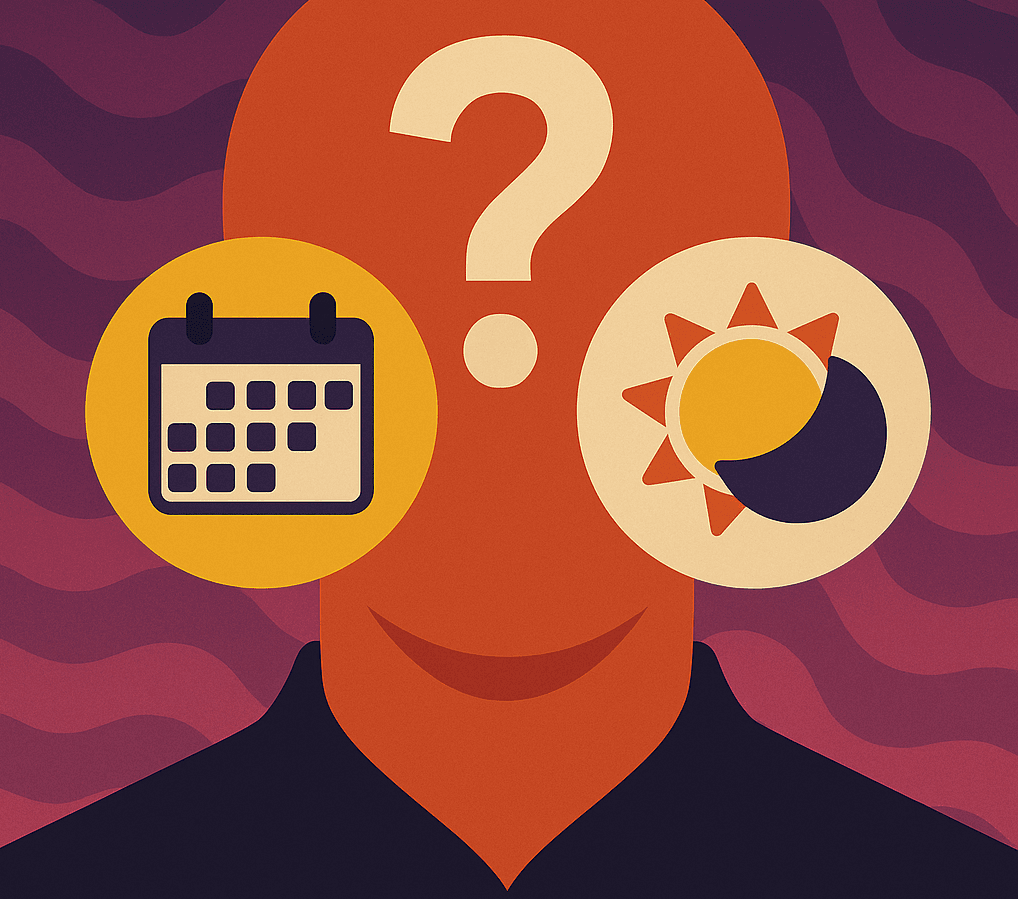
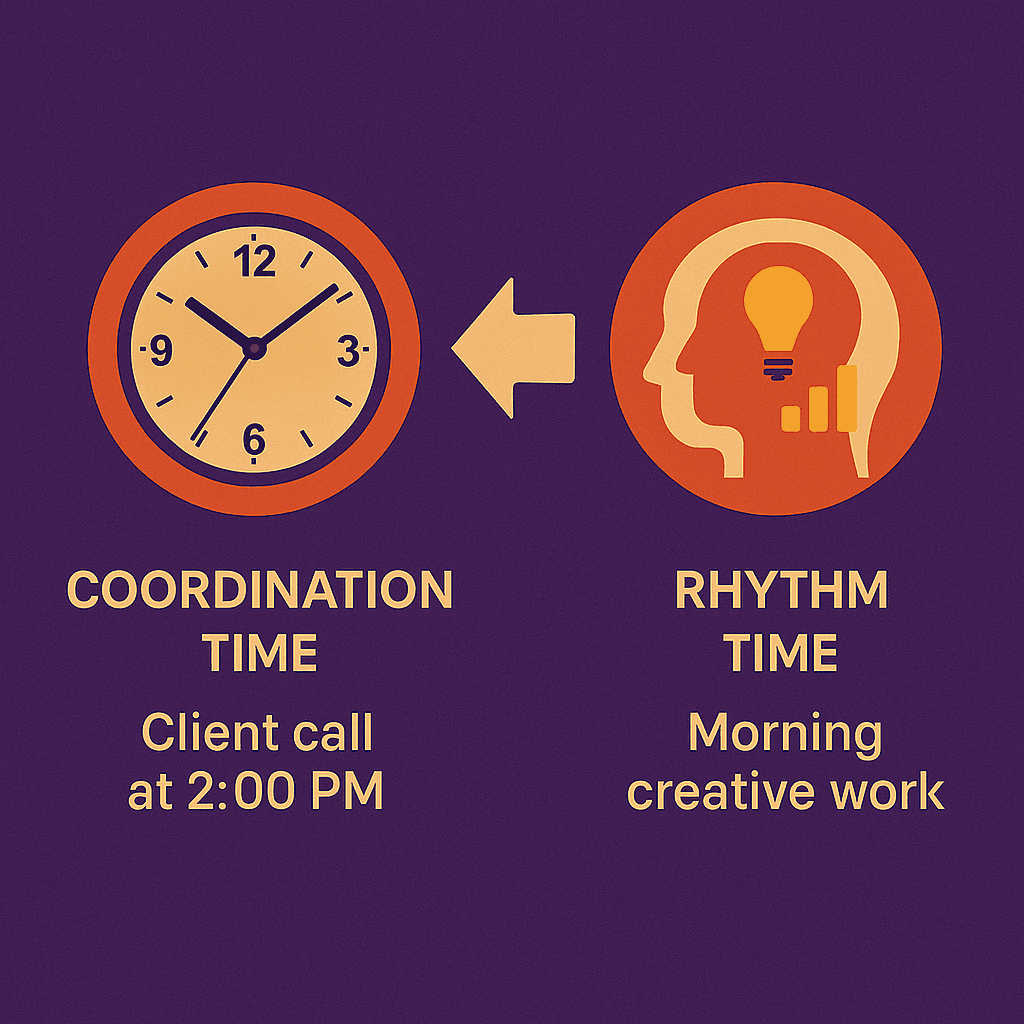
Imagine a system that distinguishes between two types of time:
Coordination Time: Activities that require precise scheduling because other people are involved. "Client call at 2:00 PM" needs clock time because you're synchronizing with someone else's schedule.
Rhythm Time: Activities that work best when aligned with your natural energy patterns. "Deep work on quarterly strategy" belongs in your morning cognitive peak, whenever that happens to be for your chronotype, but doesn't need a precise start time.
This distinction isn't about vagueness versus precision. It's about matching the scheduling approach to the activity's actual requirements.
Some activities genuinely need coordination: meetings, appointments, collaborative work. These require specific clock times.
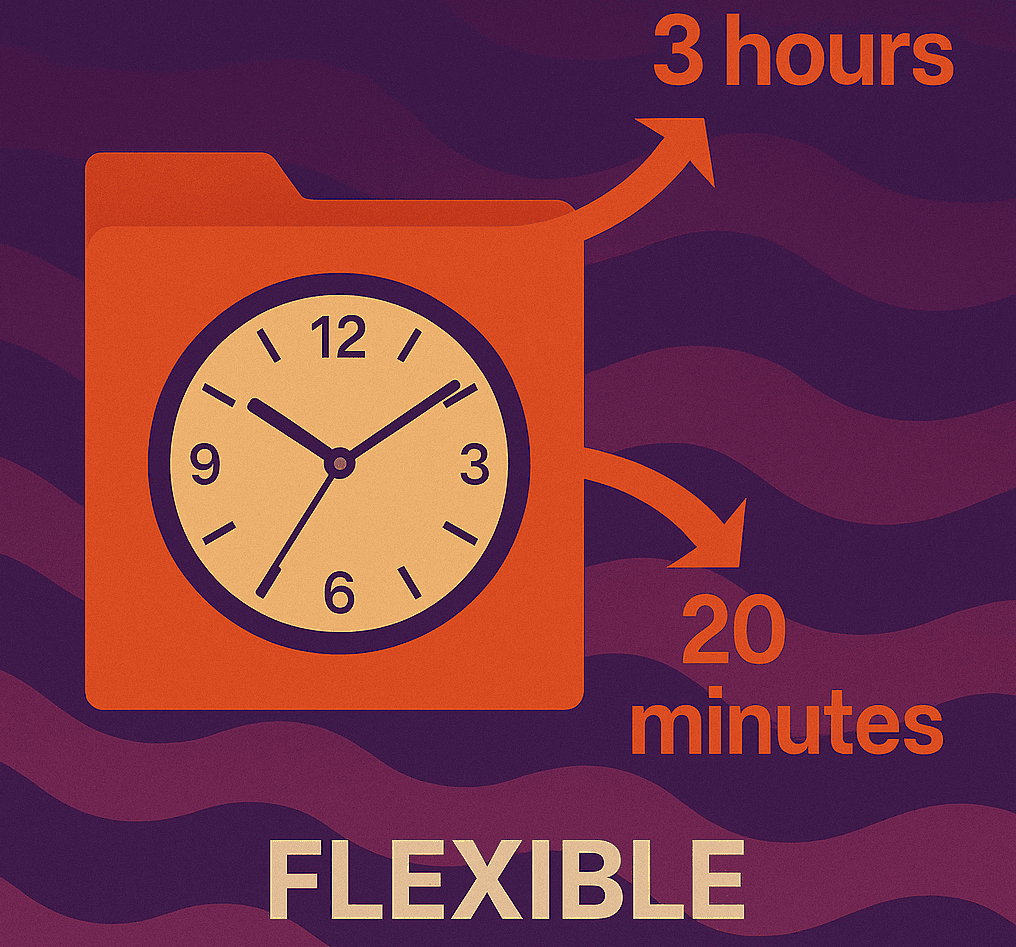
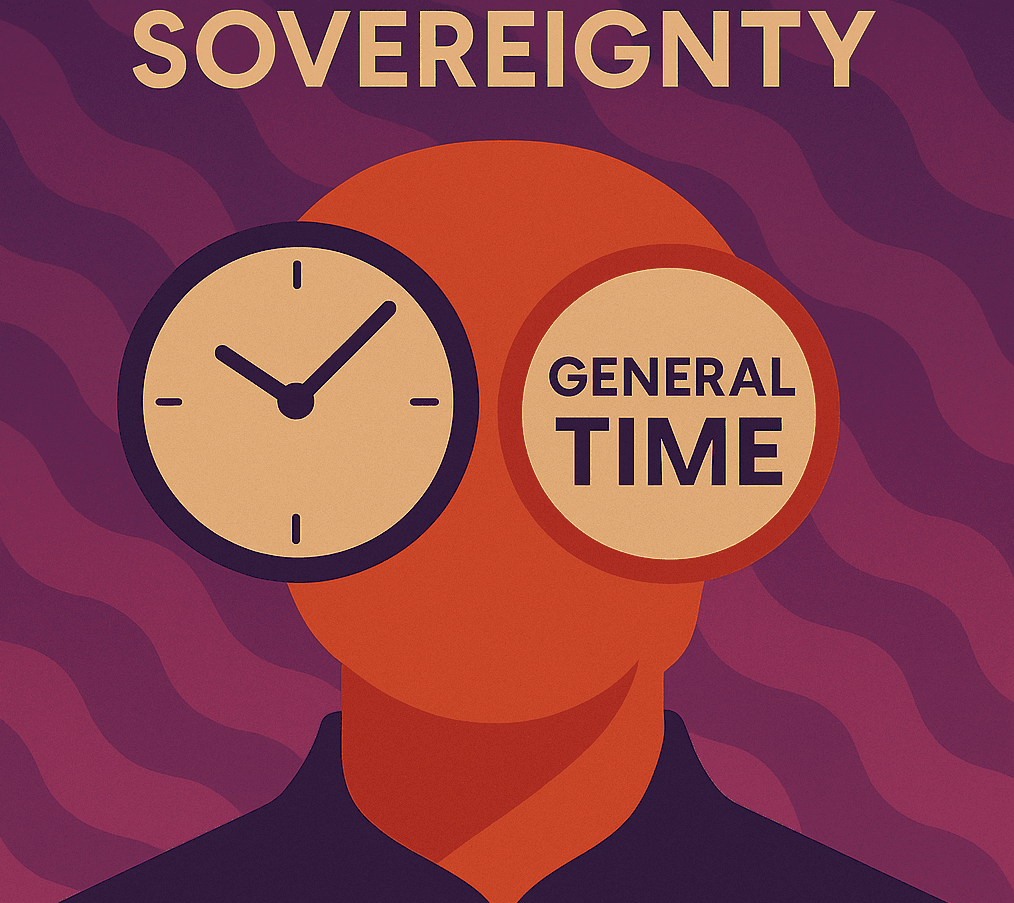
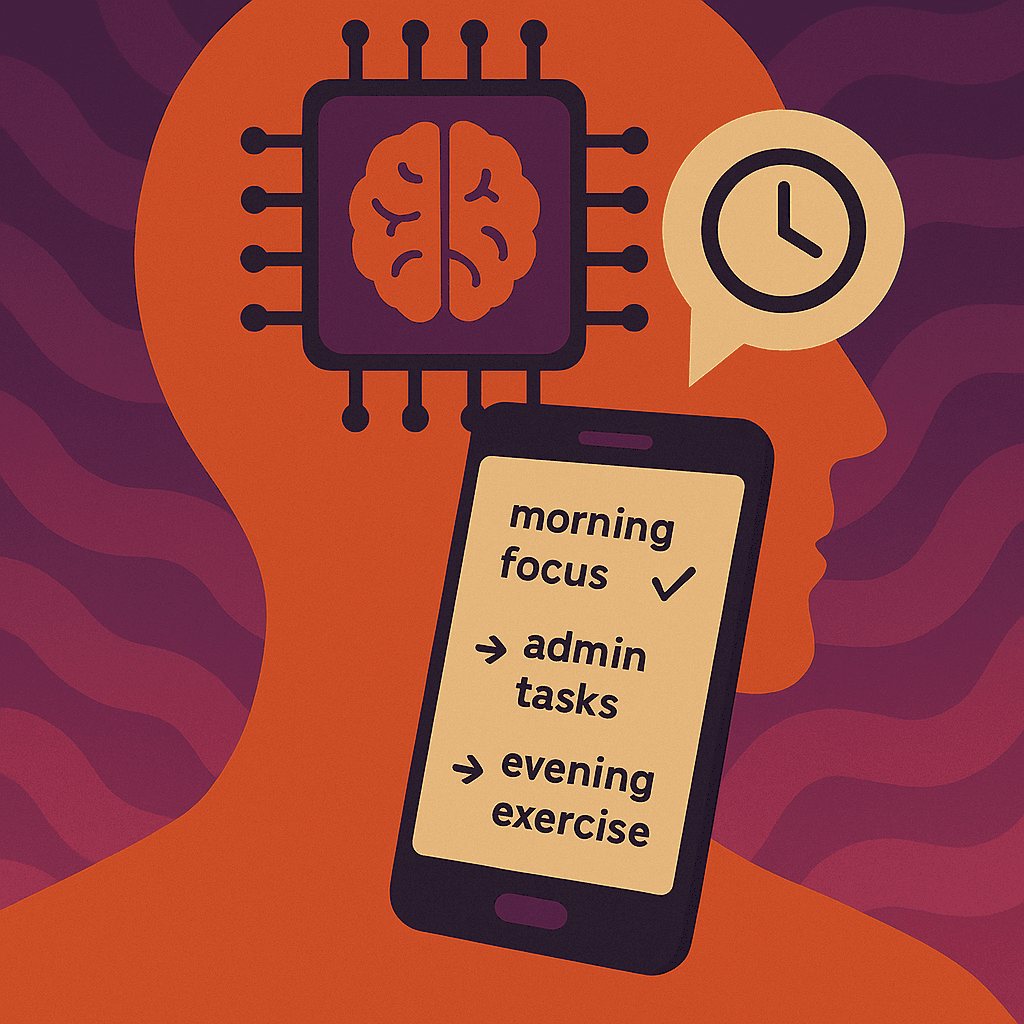
Other activities work better with what we might call "general time" scheduling: locating them within appropriate dayparts while allowing flexibility about exact timing. "Morning creative work" or "afternoon admin tasks" or "evening exercise" specify enough to create structure without imposing rigidity that fights biological rhythms.